Hand hygiene sounds simple…until a surveyor asks why your clinicians use sanitizer in one situation and soap and water in another. Or until infection control logs don’t match what’s actually happening in the field. Or until staff training reduces CDC guidance to “wash your hands,” without explaining when that instruction is no longer sufficient.
For Medicare-certified home health and hospice agencies, hand hygiene isn’t just a clinical best practice. It’s a:
- Survey focus area
- A patient safety issue
- A common source of preventable deficiencies when policies oversimplify what the CDC actually requires
*This article was written in consultation with Mariam Treystman.
At The Home Health Consultant, we work with Medicare-certified agencies every day on infection control systems, survey readiness, and staff education.
We’re writing this article to break down the CDC’s hand hygiene guidance as it truly applies to home health and hospice clinicians. In doing so agencies can align their policies, training, and day-to-day practice with federal expectations and decide what level of support best fits their compliance journey.

Why Does the CDC Emphasize Hand Hygiene in Home Health and Hospice Care?
According to the CDC, hand hygiene is one of the most effective ways to prevent the spread of infections between patients and healthcare personnel. Proper hand hygiene reduces:
- Transmission of harmful and potentially deadly germs
- Spread of antibiotic-resistant organisms
- Risk of healthcare personnel becoming colonized or infected
The CDC notes that healthcare personnel may need to clean their hands up to 100 times during a single work shift, which explains why hand hygiene failures are often related to workflow design, product selection, and skin irritation (not just staff compliance).
*In home health and hospice, clinicians move between patient environments, making consistent hand hygiene even more critical, and difficult, than in single-facility settings.
What Does the CDC Mean by “Hand Hygiene” in Healthcare Settings?
The CDC uses hand hygiene as an umbrella term that includes several distinct practices:
- Handwashing with soap and water (plain or antiseptic soap)
- Antiseptic hand rubs, most commonly alcohol-based hand sanitizer
- Surgical hand antisepsis, which applies in procedural or surgical contexts
Each method has specific indications. CDC guidance makes it clear that hand hygiene is not a one-size-fits-all activity, and choosing the wrong method in the wrong situation can undermine infection control efforts.
When Are Home Health and Hospice Clinicians Required to Clean Their Hands?
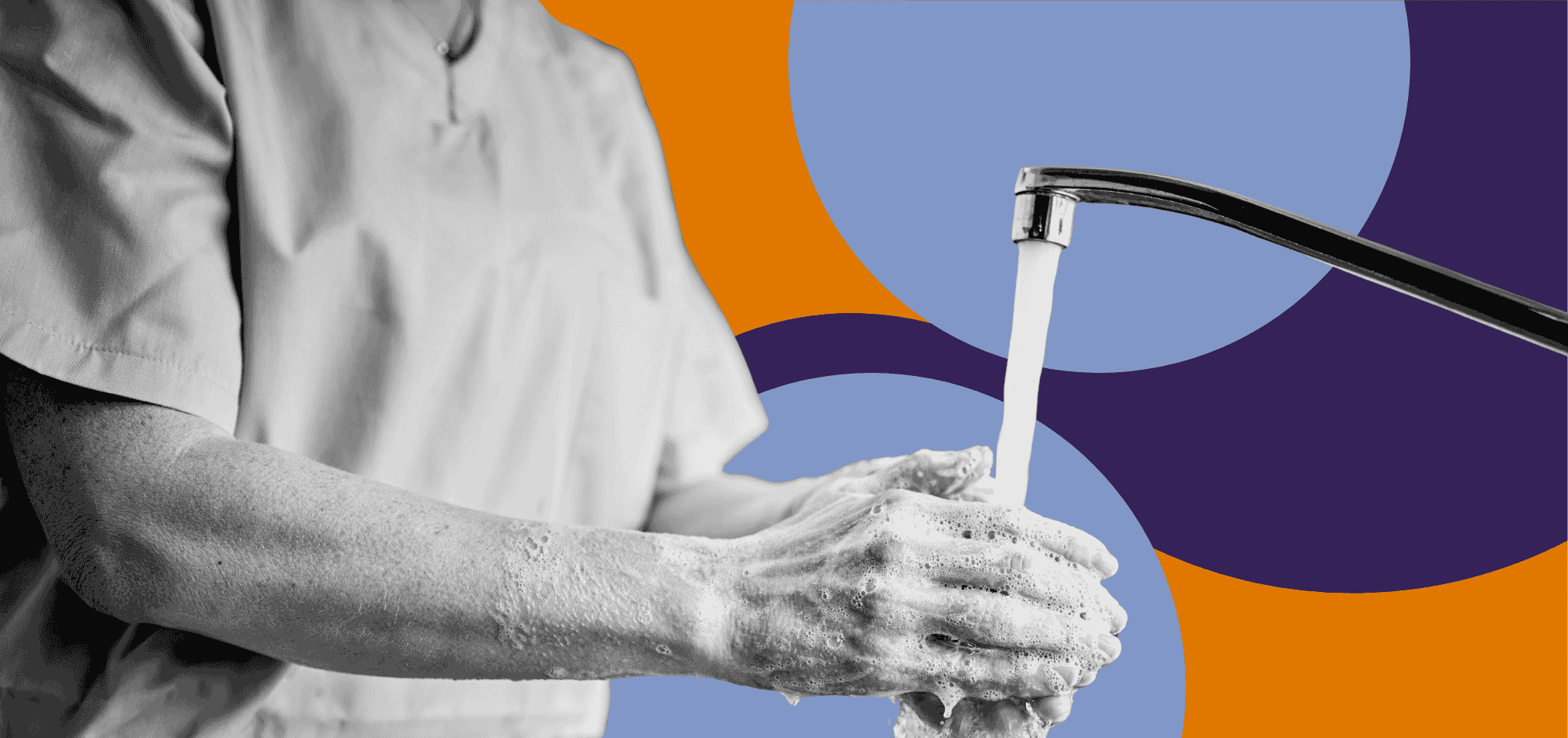
CDC research shows that clinicians can contaminate their hands during both obvious and seemingly “clean” tasks, including but not limited to:
- Touching intact patient skin
- Taking vital signs
- Assisting with mobility or repositioning
- Handling patient equipment or nearby surfaces
The CDC outlines a consistent transmission pattern: organisms transfer to hands, survive long enough to persist, hand hygiene is skipped or ineffective, and those organisms are then transferred to another patient or surface.
This is why CDC guidance does not limit hand hygiene to visibly dirty tasks or invasive care.
When Should Alcohol-Based Hand Rub Be Used in Home Health and Hospice?
Alcohol-based hand rub (ABHR) is a cornerstone of CDC hand hygiene guidance—but only when used appropriately.
What Does the CDC Say Alcohol-Based Hand Rub Is Effective Against?
According to the CDC:
- ABHR products with 60%–95% alcohol are highly effective against most bacteria
- They are effective against many viruses, including but not limited to influenza, HIV, and RSV
- They reduce bacterial counts on hands more effectively than plain soap during routine care when hands are not visibly soiled
Multiple studies reviewed by the CDC show that alcohol-based hand rubs outperform soap and water for routine hand hygiene in many clinical situations. But, this is not the case for everything.
When Does the CDC Require Soap and Water Instead of Hand Sanitizer?
The CDC is explicit that alcohol-based hand rub does not replace soap and water in all situations.
Soap and water are required when:
- Hands are visibly dirty or soiled
- Hands are contaminated with blood or body fluids
- The patient has known or suspected Clostridioides difficile infection
Alcohol has poor activity against bacterial spores, including C. difficile. In these cases, physical removal through handwashing is necessary .
This distinction is especially important for hospice and home health clinicians managing high-risk or immunocompromised patients.
Do Gloves Eliminate the Need for Hand Hygiene?

Short answer: No, gloves do not eliminate the need for hand hygiene.
CDC guidance clearly states that:
- Hand hygiene must occur before putting on gloves and after removing them
- Gloves can become contaminated just like bare hands
- Gloves do not prevent cross-contamination on their own
For home health and hospice agencies, glove use without proper hand hygiene is a common compliance gap that surveyors frequently identify during infection control reviews.
What Are the Most Common Hand Hygiene Mistakes in Home Health and Hospice?
From a compliance standpoint, the CDC guidance highlights several recurring risk areas, including but not limited to:
- Treating sanitizer and soap as interchangeable
- Using alcohol-based hand rub for C. difficile cases
- Skipping hand hygiene when gloves are used
- Failing to address skin irritation that leads to poor adherence
- Training staff on “what” to do without explaining “when” and “why”
These issues typically stem from oversimplified policies rather than intentional noncompliance.
How Should Agencies Align Hand Hygiene Policies With CDC Guidance?
To align with CDC expectations, home health and hospice agencies should ensure that:
- Policies clearly distinguish between ABHR and soap-and-water scenarios
- Staff education explains the reasoning behind each requirement
- Infection control monitoring reflects federal and state guidelines
- Documentation, training, and practice are consistent
Hand hygiene compliance is strongest when agencies treat it as a system, not a poster or annual in-service.
The CDC’s guidance makes one thing clear: effective hand hygiene depends on method selection, timing, technique, and sustainability.
Hand hygiene is only one piece of a compliant infection control program.
For your next read, check out our article on Infection Control Practices below.
*Disclaimer: The content provided in this article is not intended to be, nor should it be construed as, legal, financial, or professional advice. No consultant-client relationship is established by engaging with this content. You should seek the advice of a qualified attorney, financial advisor, or other professional regarding any legal or business matters. The consultant assumes no liability for any actions taken based on the information provided.
Topics: